Physiotherapy for Posture Correction: Why It Matters and How a Physio Can Help


Physiotherapy for posture correction is one of those things that most people only think about after pain has already set in. The stiff neck that will not go away. The lower back ache that gets worse every afternoon. The headaches that keep coming back despite medication.
In many cases, the root cause is not an injury or a disease. It is how the body has been holding itself, day after day, for months or years. The shoulders roll forward. The head drifts ahead of the spine. The lower back either flattens or curves too much. Over time, these patterns create muscle imbalances, joint strain, and pain that becomes increasingly difficult to ignore.
The good news is that posture can be improved at any age with the right guidance. A physiotherapist can identify exactly what is happening, explain why it is causing problems, and give you a clear plan to fix it.
This guide explains how posture problems develop, what a physiotherapy assessment involves, who benefits most, and how mobile physiotherapy makes posture correction more effective by addressing habits in your actual daily environment.
What Causes Poor Posture?
Poor posture rarely develops overnight. It is the result of repeated habits, physical changes, and environmental factors that gradually shift the body out of alignment.
The most common causes include prolonged sitting at a desk or computer, especially without ergonomic setup. Excessive phone and tablet use, which pulls the head forward and rounds the upper back. Muscle weakness in the core, back, and glutes that leaves the spine unsupported. Muscle tightness in the chest, hip flexors, and hamstrings that pulls the body into misalignment. Age-related changes including spinal disc degeneration, osteoporosis, and loss of muscle mass. Neurological conditions that affect muscle tone, coordination, and body awareness. Injury or surgery recovery where the body compensates by shifting weight or guarding.
For children, posture issues can be linked to developmental delays, low muscle tone, heavy school bags, and excessive screen time. Our mobile paediatric physiotherapy service works with children across all three locations to address these issues early.
For elderly adults, posture decline is often linked to reduced activity, weakened muscles, joint stiffness, and conditions like osteoporosis that change spinal curvature. Aged care physiotherapy addresses these factors as part of a broader mobility and independence program.
“Most people who come to us with chronic neck or back pain are surprised when we tell them their posture is the primary driver. They have been treating the symptom for months without addressing the cause.” – Mobile physiotherapist, Health Next Door
How Physiotherapy for Posture Correction Works
A posture correction program with a physiotherapist typically involves several components that work together over weeks and months.
Posture Assessment
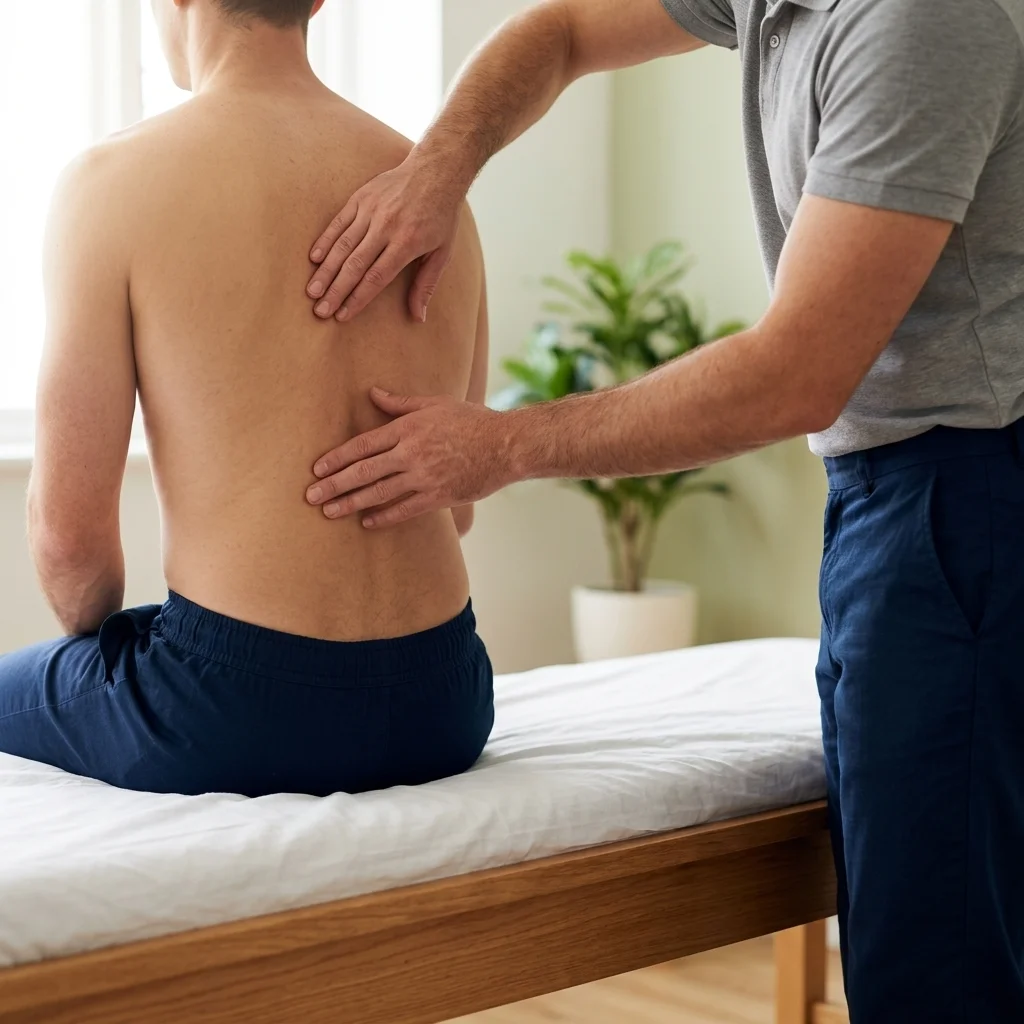
The physiotherapist begins with a thorough assessment of your standing, sitting, and moving posture. This includes observing spinal alignment from the front, side, and back, testing muscle strength and flexibility in key postural muscle groups, identifying areas of tightness, weakness, or imbalance, assessing how you sit, stand, and move during daily activities, and reviewing your work setup, sleeping position, and daily habits.
This assessment is where mobile physiotherapy has a genuine advantage. When the physio comes to your home or workplace, they can see your actual desk setup, the chair you sit in, and the habits you have in your real environment, not a clinical simulation of it.
Treatment Plan
Based on the assessment, the physiotherapist designs a program that typically includes targeted strengthening exercises for weak postural muscles (especially the deep core, mid-back, and glute muscles), stretching for tight muscles that are pulling the body out of alignment (commonly the chest, hip flexors, and upper traps), manual therapy to release tension and improve joint mobility, ergonomic advice for your specific work and home setup, and habit modification strategies to help you maintain better posture throughout the day.
Progression and Review
Posture correction is not instant. It takes consistent effort over several weeks to retrain muscles and habits. Your physiotherapist will progress exercises as strength improves and review your posture regularly to track changes.
Common Posture Problems a Physiotherapist Can Treat
Hydrotherapy is used for a wide range of conditions across different age groups. It is not limited to one type of injury or one stage of recovery. Physiotherapists recommend it for acute post-surgical rehabilitation, chronic disease management, neurological conditions, and general mobility decline in older adults.
Hydrotherapy May Help With:
| Posture Problem | What It Looks Like | Common Symptoms |
|---|---|---|
| Forward head posture | Head sits ahead of the shoulders | Neck pain, headaches, jaw tension |
| Rounded shoulders | Shoulders roll forward, upper back curves | Shoulder pain, upper back stiffness, reduced arm movement |
| Thoracic kyphosis | Excessive rounding of the upper back | Mid-back pain, breathing restriction, fatigue |
| Lumbar lordosis | Excessive inward curve of the lower back | Lower back pain, hip tightness |
| Flat back | Loss of natural lumbar curve | Lower back stiffness, difficulty standing for long periods |
| Scoliosis | Lateral spinal curvature | Uneven shoulders or hips, back pain, reduced flexibility |
| Swayback | Hips push forward, upper body leans back | Lower back and hip pain, poor balance |
Each of these patterns creates specific muscle imbalances and joint stresses that a physiotherapist can identify and address. For patients with neck pain, back problems, or shoulder pain, posture correction is often the most important component of the treatment plan.
Who Benefits Most from Posture Correction Physiotherapy?
Office Workers and Desk-Based Professionals
Prolonged sitting is one of the biggest contributors to posture problems. The hip flexors shorten, the glutes weaken, the shoulders round forward, and the head drifts ahead of the spine. Over months and years, this creates chronic pain patterns that painkillers cannot fix.
Health Next Door’s corporate mobile physiotherapy service brings posture assessment and correction directly to workplaces across Sydney, Brisbane, and the Gold Coast.
Elderly Adults
Age-related posture decline affects balance, breathing, mobility, and overall independence. A stooped posture increases fall risk because the centre of gravity shifts forward. It also reduces lung capacity because the ribcage cannot expand fully.
Posture correction for elderly adults focuses on gentle strengthening, flexibility work, and confidence building. Combined with falls prevention strategies and balance exercises, posture correction helps seniors maintain independence and quality of life.
Children and Adolescents
Heavy school bags, excessive screen time, and developmental conditions can all affect posture in young people. Early intervention through paediatric physiotherapy can prevent posture problems from becoming entrenched as the child grows.
NDIS Participants
People living with physical or neurological disabilities often experience posture challenges related to muscle tone, weakness, or reduced mobility. Posture correction is commonly included in NDIS physiotherapy support plans as part of broader physical capacity building.
People Recovering from Injury or Surgery
After an injury or surgery, the body often compensates by shifting weight, guarding the affected area, or adopting protective postures. These compensations can become habitual if not addressed. Physiotherapy after surgery includes posture correction to prevent long-term compensatory patterns.
Why Mobile Physiotherapy Works Better for Posture Correction
Posture is not just about how you hold yourself during a 30-minute clinic appointment. It is about how you sit at your desk for 8 hours, how you stand in your kitchen, how you sleep, and how you move through your day.
When a physiotherapist comes to your home, they see the real environment where your posture habits live. They can assess and adjust your actual desk and chair setup, observe how you sit on your couch and at your dining table, check your pillow and sleeping position, watch how you move through doorways, stairs, and daily tasks, and design exercises using the space and equipment you actually have.
This real-world assessment is something a clinic visit simply cannot replicate. It makes the difference between generic advice and a program that is tailored to your actual life.
Health Next Door provides mobile physiotherapy across Sydney, Brisbane, and the Gold Coast.
How Long Does Posture Correction Take?
This depends on the severity of the posture problem, how long it has been developing, and how consistently the patient follows the program.
As a general guide, noticeable improvement in awareness and pain reduction typically occurs within 2 to 4 weeks of consistent work. Meaningful structural changes in posture usually take 6 to 12 weeks. Long-term habit change and sustained postural improvement takes 3 to 6 months of regular practice.
The physiotherapist will progress your program as you improve and adjust the focus as different muscle groups respond to treatment. Consistency is the key factor. A few minutes of targeted exercises daily is more effective than an hour once a week.
Posture Correction and Pain Relief
Many people seek physiotherapy for pain without realising that their posture is the underlying cause. The connection between posture and pain is well established in clinical practice.
Forward head posture increases the load on the cervical spine by up to 27 kilograms of additional force, which directly causes neck pain and tension headaches. Rounded shoulders compress the rotator cuff and restrict shoulder movement, contributing to shoulder pain. Excessive lumbar lordosis or flat back posture overloads the lower spine, contributing to chronic back pain. Poor seated posture compresses the sciatic nerve pathway, which can contribute to sciatica symptoms.
“Correcting posture does not just improve how you look. It changes how your body distributes load, how your joints move, and how much strain your muscles are under throughout the day. For many patients, posture correction is the single most effective treatment for their chronic pain.” – Mobile physiotherapist, Health Next Door
Posture and Neurological Conditions
People living with neurological conditions such as Parkinson’s disease, stroke, multiple sclerosis, and cerebral palsy often experience significant posture challenges.
Parkinson’s disease commonly causes a stooped, forward-leaning posture that worsens over time. The PD Warrior exercise program at Health Next Door includes targeted posture work as a core component.
Stroke recovery often involves retraining the body to maintain upright posture against patterns of muscle weakness and spasticity. Neurological physiotherapy addresses these postural challenges as part of a comprehensive rehabilitation program.
Children with cerebral palsy benefit from early posture intervention to support functional development and prevent secondary complications.
Funding Options for Posture Correction Physiotherapy
Posture correction physiotherapy may be covered under several funding pathways.
NDIS covers physiotherapy including posture correction when it is part of a participant’s support plan. Learn more about NDIS physiotherapy services.
CTP insurance covers physiotherapy for posture-related pain resulting from motor vehicle accidents. Learn more about CTP physiotherapy.
WorkCover covers physiotherapy for posture-related injuries sustained in the workplace, including desk-related musculoskeletal conditions. Learn more about WorkCover physiotherapy.
DVA covers physiotherapy for eligible veterans. Learn more about DVA physiotherapy.
Medicare may provide a rebate under a Chronic Disease Management plan for patients with chronic posture-related conditions.
Private health insurance extras policies typically cover physiotherapy consultations that include posture correction.


Health Next Door, we bring mobile physiotherapy to your doorstep, ensuring a patient-centric approach that prioritizes your needs and goals. Our experienced physiotherapists assess your condition and create a personalized therapy plan, helping you recover in the comfort of your home with expert care tailored just for you. With our comprehensive mobile physiotherapy services, you get professional treatment for pain relief, injury recovery, and mobility improvement—all without leaving your home. Experience convenient, high-quality care designed to fit your lifestyle.
View All Articles