Physiotherapy for Cerebral Palsy: A Complete Guide for Families and Carers

If you’re a parent, carer, or support coordinator researching physiotherapy for cerebral palsy, you’ve probably already discovered that no two people with CP are alike. The condition varies enormously in how it affects movement, muscle tone, posture, and daily function. That means the physiotherapy approach needs to be just as individual.
The encouraging reality is that physiotherapy makes a genuine, measurable difference. With the right therapist, the right goals, and consistent sessions, children and adults with cerebral palsy can achieve meaningful improvements in mobility, independence, and quality of life.
This guide explains what that looks like in practice, and how a mobile physio service can make the whole process easier for your family.
WHAT IS CEREBRAL PALSY AND WHY DOES PHYSIOTHERAPY MATTER?
Cerebral palsy (CP) is a group of permanent movement and posture disorders caused by damage to the developing brain, most commonly before or during birth. It is the most common physical disability in childhood in Australia.
CP affects muscle tone, coordination, balance, and motor function in different ways depending on which areas of the brain are involved. Some people have mild CP and live largely independently. Others require significant support for daily activities.
Physiotherapy matters because the brain, particularly in children, has a remarkable capacity to adapt. This is called neuroplasticity. When therapy is started early and delivered consistently, the brain can develop new pathways that compensate for areas of damage, improving motor function over time.
Without physiotherapy, secondary complications can develop: muscle tightening, joint contractures, scoliosis, and reduced bone density. Physio helps prevent these complications as much as it helps improve movement.
TYPES OF CEREBRAL PALSY AND HOW PHYSIOTHERAPY ADDRESSES EACH
Understanding the type of CP helps explain why treatment approaches differ. Here is a summary of the main types and what physiotherapy typically targets:
| Type of CP | Key Characteristics | Physiotherapy Focus |
|---|---|---|
| Spastic CP (most common) | Increased muscle tone, stiffness, restricted movement | Stretching, strengthening, range of motion, splinting guidance |
| Dyskinetic CP | Uncontrolled, involuntary movements, fluctuating tone | Postural control, movement quality, functional task practice |
| Ataxic CP | Poor balance and coordination, unsteady gait | Balance training, coordination exercises, gait retraining |
| Mixed CP | Combination of features from multiple types | Tailored program addressing the dominant features present |
| Bilateral CP (diplegia/quadriplegia) | Affects both sides of the body, often legs more than arms | Gait training, transfer skills, upper limb function |
| Unilateral CP (hemiplegia) | Affects one side of the body | Bilateral task training, constraint therapy principles, hand function |
A qualified physiotherapist assesses the individual’s specific presentation before designing a program. There is no one-size-fits-all approach to CP physio.
WHAT PHYSIOTHERAPY FOR CEREBRAL PALSY ACTUALLY INVOLVES
Physiotherapy for CP is not just exercise. It is a structured, evidence-based approach to improving how the body moves and functions in daily life. Sessions typically involve a combination of the following:
Strength and Conditioning
Building strength in weakened muscle groups helps children and adults achieve better movement control. Strengthening programs for CP are carefully designed to avoid increasing spasticity while still building functional muscle capacity.
Stretching and Flexibility Work
Tight muscles are one of the most common secondary complications of spastic CP. Regular stretching reduces muscle tightness, maintains joint range of motion, and helps delay or prevent the need for surgical intervention. Parents and carers are often taught home stretching programs to continue between sessions.
Gait Training and Walking Practice
For children and adults who walk, physiotherapy focuses on improving gait pattern, efficiency, and safety. This can include treadmill training, obstacle courses, and specific drills targeting the walking pattern. For non-walkers, the goal is often improving transfers and seated posture.
Balance and Coordination
Balance difficulties increase fall risk and limit independence. Physiotherapy uses targeted balance exercises, mat work, and functional activity practice to improve stability and confidence in movement.
Postural Management
Correct positioning throughout the day protects joint alignment, prevents deformity, and supports better participation in school, play, and daily activities. Physiotherapists advise on seating, sleeping positions, and assistive equipment.
Equipment Prescription and Review
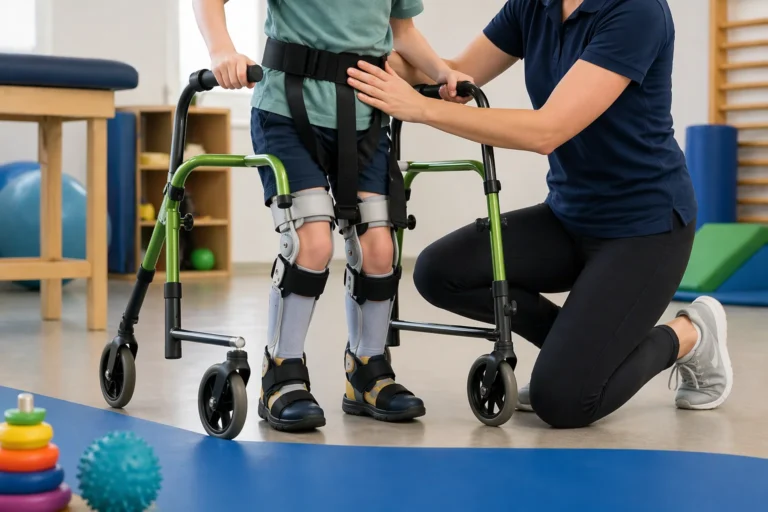
Physiotherapists assess and recommend equipment including walking frames, ankle-foot orthoses (AFOs), standing frames, and wheelchairs. They also review existing equipment to ensure it remains appropriate as the child grows or as function changes.
Goal-Setting and Family Education
Every good CP physio program is built around goals that matter to the child and their family, whether that’s walking to the school bus, participating in sport, or managing daily dressing independently. Families are active participants, not observers.
THE ROLE OF EARLY INTERVENTION in CP PHYSIOTHERAPY
Early intervention is one of the most evidence-backed principles in cerebral palsy management. The earlier therapy begins, the greater the opportunity to harness neuroplasticity and build functional movement patterns before compensatory habits become ingrained.
Most children with CP are referred to physiotherapy before their first birthday, often while a formal diagnosis is still being confirmed. Therapists work with infants on tummy time, head control, rolling, sitting, and early movement milestones.
For children approaching school age, the focus shifts to the skills needed for classroom participation, playground access, and independent mobility. In adolescence and adulthood, maintaining function, managing spasticity, and building independence for adult life becomes the priority.
Read more about child developmental milestones and what to look for at each stage of development.
WHY MOBILE PHYSIOTHERAPY WORKS PARTICULARLY WELL FOR CP
Getting a child with cerebral palsy to and from a clinic appointment is no small task. For many families, it involves specialist car seats, wheelchair transport, multiple carers, and significant time and energy, all of which can be exhausting before the session even starts.
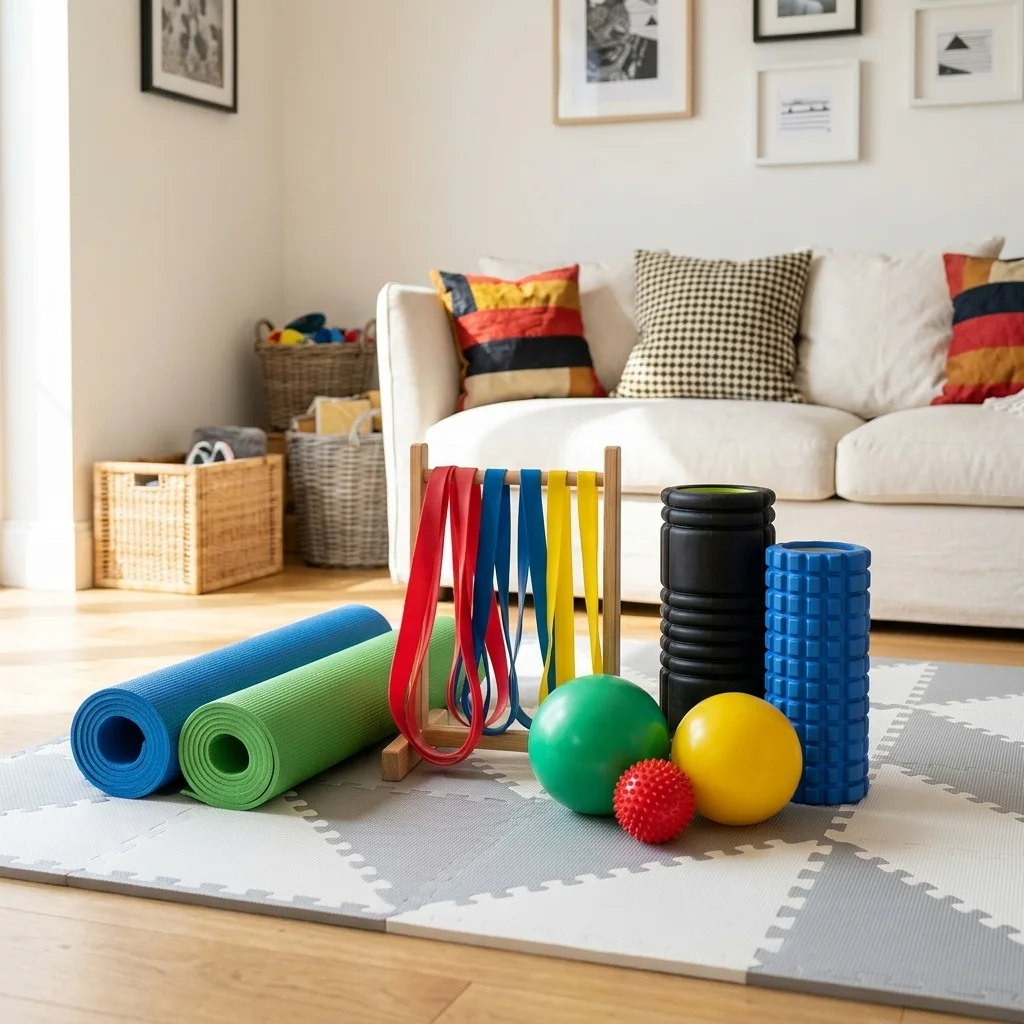
Mobile physiotherapy removes that barrier entirely. The therapist comes to the home, school, or care facility, bringing the right equipment and expertise directly to the child.
There are several additional benefits beyond convenience:
- Real-world skill building: Therapy in the home environment means goals are practised in the actual space where they need to happen. Navigating the hallway, getting on and off the couch, managing steps to the front door: these are all practiced in situ.
- Family involvement: Parents and siblings can observe and participate in sessions far more naturally at home than in a clinic setting. Home programs are more likely to be carried out consistently when parents have seen them demonstrated in their own environment.
- Reduced anxiety for the child: Many children with CP have sensory sensitivities or anxiety around new environments. Therapy in a familiar space often produces better engagement and better outcomes.
- Therapist assessment of the home environment: A mobile physio can assess and advise on the actual home layout, furniture, and access, making practical recommendations that a clinic-based therapist simply cannot.
Explore the benefits of mobile paediatric physiotherapy in more detail, including how it supports busy families across Sydney, Brisbane, and the Gold Coast.
“When our therapist started coming to the house, everything changed. Our son was so much more relaxed and willing to try things. We didn’t have to spend an hour getting him ready and into the car, only to arrive already exhausted. The sessions at home were just better, for all of us.”
Parent of a child with spastic diplegia, Sydney
NDIS FUNDING FOR CEREBRAL PALSY PHYSIOTHERAPY
Most children and adults with cerebral palsy in Australia are eligible for NDIS funding that covers physiotherapy. CP is a permanent disability with early childhood onset, which means most participants qualify under the NDIS Access criteria.
Physiotherapy for CP can be funded under several NDIS budget categories:
- Capacity Building: Improved Daily Living (most common for CP physio sessions)
- Core Supports (sometimes used for therapy assistants supporting physio programs)
- Capital Supports (for equipment prescribed by a physiotherapist)
Support coordinators play a key role in helping families identify the right providers and align therapy goals with NDIS plan goals. A good mobile physio service works collaboratively with support coordinators, providing reports, updates, and goal reviews that keep the NDIS plan on track.
Learn more about NDIS physiotherapy services and how to access funding for your child’s program.
For support coordinators, understanding how to maximise client outcomes through mobile physio is essential. Read the guide on how support coordinators can maximise NDIS physiotherapy outcomes for their clients.
WHAT TO EXPECT FROM A FIRST PHYSIOTHERAPY SESSION FOR CP
The first session is always an assessment. There are no exercises before the therapist has a clear picture of where things are right now.
A thorough initial assessment for cerebral palsy typically covers:
- Medical and developmental history: Type of CP, age of diagnosis, previous therapies, surgeries, medications including Botox injections for spasticity.
- Functional assessment: What the child or adult can do independently, what they struggle with, and what they and their family most want to improve.
- Movement and muscle assessment: Muscle tone, strength, range of motion, posture, balance, and gait (if applicable).
- Equipment review: Current use of orthotics, walking aids, seating systems, or other assistive devices.
- Goal setting: Collaborative discussion with the child and family to establish meaningful, measurable goals for the therapy program.
From this assessment, the physiotherapist designs a personalised program. Sessions after the assessment move into active therapy, with the therapist guiding activities and teaching home exercises for the family to carry out between visits.
Frequency varies depending on age, goals, and NDIS plan. Many children with CP see their physio weekly or fortnightly, with home programs carried out daily by parents.


Health Next Door, we bring mobile physiotherapy to your doorstep, ensuring a patient-centric approach that prioritizes your needs and goals. Our experienced physiotherapists assess your condition and create a personalized therapy plan, helping you recover in the comfort of your home with expert care tailored just for you. With our comprehensive mobile physiotherapy services, you get professional treatment for pain relief, injury recovery, and mobility improvement—all without leaving your home. Experience convenient, high-quality care designed to fit your lifestyle.
View All Articles