How to Choose a Physiotherapist: A Complete Guide for Better Recovery at Home



Why Choosing the Right Physiotherapist Matters
Choosing the right physiotherapist makes a genuine difference to how quickly you recover, how motivated you stay throughout treatment, and whether your goals are actually achieved.
A poor fit wastes time and money. A good fit means you are working with someone who understands your condition, communicates clearly, and builds a treatment plan around your real life rather than a generic protocol.
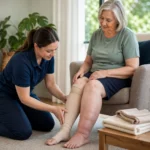
For people who need physiotherapy at home, the stakes are even higher. Whether you are an elderly person managing mobility challenges, a parent of a child with developmental needs, or an NDIS participant working toward specific goals, the physiotherapist coming into your home needs to be the right person for your situation, not just the nearest available option.
This guide walks you through each step of choosing well, so you can make a confident decision.
Step 1: Understand Your Specific Needs
Before you search for a physiotherapist, spend a few minutes getting clear on what you actually need. This shapes every decision that follows.
Ask yourself:
- Is this for an acute injury, post-surgical recovery, or a chronic and ongoing condition?
- Do you or your family member have a neurological condition such as Parkinson’s disease, MS, or stroke-related impairment?
- Are you managing aged care needs, either at home or in a residential facility?
- Is this for a child with developmental delays, cerebral palsy, or an NDIS plan?
- Do you need physiotherapy covered under NDIS, DVA, CTP, WorkCover, or aged care funding?
- Is getting to a clinic genuinely possible, or would in-home physiotherapy be more practical?
Being clear on these questions helps you find a physiotherapist with the right specialisation rather than settling for a generalist who may not have experience with your specific condition.
Health Next Door provides mobile physiotherapy across Sydney, Brisbane, and the Gold Coast for patients whose needs are better served at home, including aged care, NDIS, neurological, paediatric, and post-surgical cases.
Step 2: Check Qualifications and Experience
All physiotherapists practising in Australia must be registered with the Australian Health Practitioner Regulation Agency (AHPRA). This is a non-negotiable baseline. You can verify any physiotherapist’s registration on the AHPRA website before booking.
Beyond registration, look for experience that matches your specific situation:
- Aged care and elderly patients: look for experience with falls prevention, post-hip or knee surgery rehabilitation, and mobility management in older adults
- Neurological conditions: Parkinson’s disease, MS, stroke recovery, and cerebral palsy all require specific clinical training and experience
- Paediatric patients: working with children requires a different communication style, an understanding of developmental milestones, and experience with NDIS paediatric funding
- NDIS participants: your physiotherapist should understand how NDIS plans work, how to write functional capacity reports, and how to align treatment with your plan goals
- DVA and CTP patients: familiarity with the relevant funding systems and reporting requirements matters for a smooth claims process
Do not hesitate to ask directly about experience with your condition during an initial enquiry. A confident, experienced physiotherapist will be able to speak clearly about their approach.
Step 3: Choose Between Clinic vs In-Home Physiotherapy
This is one of the most important decisions you will make, and the right answer depends entirely on your situation.
Many people default to clinic-based physiotherapy simply because it is what they are used to. But for a significant proportion of patients, in-home physiotherapy delivers better outcomes for very practical reasons.
| Factor | Clinic-Based Physiotherapy | In-Home Physiotherapy |
|---|---|---|
| Travel requirement | Patient must travel to appointment | Physiotherapist comes to you |
| Suitable for | Mobile patients, sports injuries, general rehab | Elderly, NDIS, neurological, post-surgical, paediatric |
| Treatment environment | Clinical, standardised | Your real home environment |
| Consistency | Can be disrupted by transport barriers | Higher attendance rates |
| Home exercise relevance | Generic advice | Specific to your actual space |
| Fatigue impact | Can exhaust patients before treatment begins | Treatment begins without travel fatigue |
| Carer involvement | Limited | Carers and family can participate |
For elderly patients, people with neurological conditions, NDIS participants, and anyone with limited mobility, the travel burden of clinic-based physiotherapy is not just inconvenient. It is a genuine barrier to consistent treatment. Missed appointments are one of the biggest reasons rehabilitation takes longer than it should.
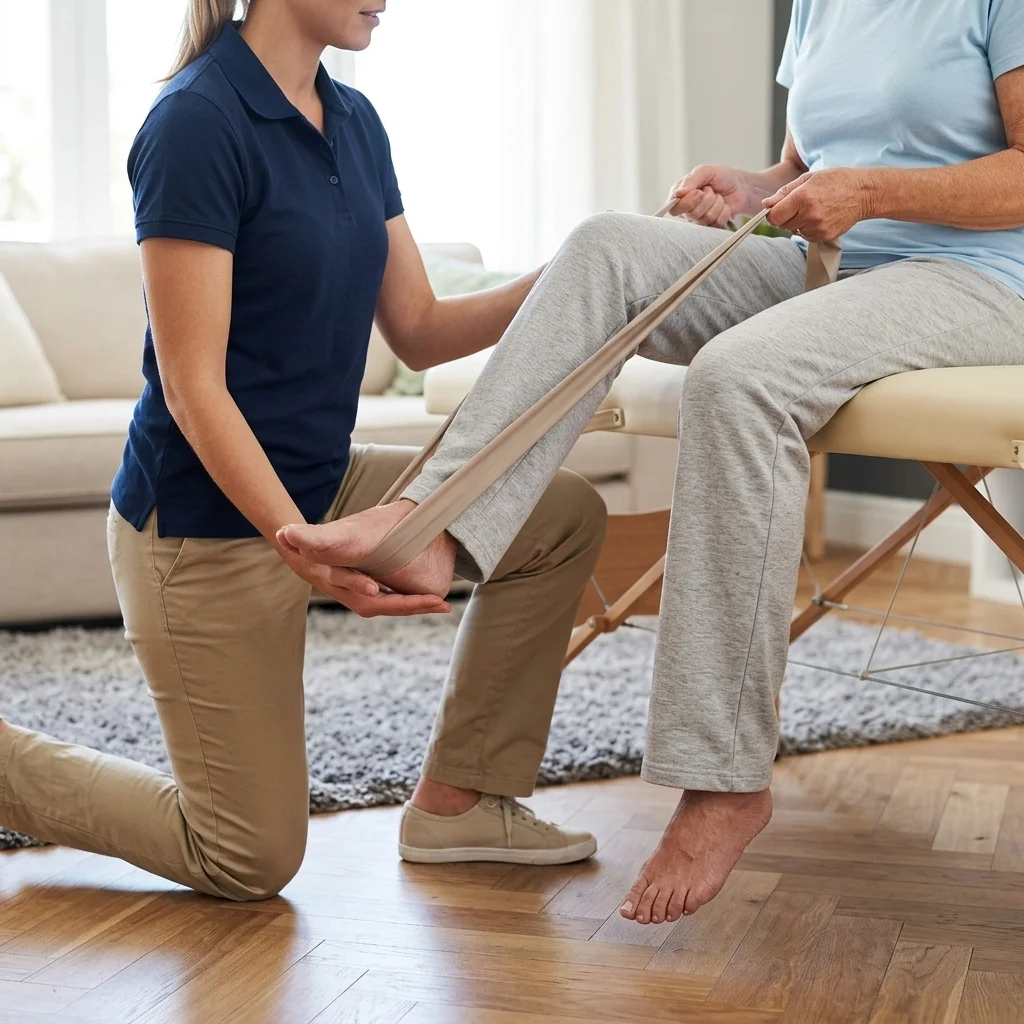
In-home physiotherapy removes that barrier entirely. Your physiotherapist assesses you in your real environment, gives advice relevant to your actual home layout, and works around your daily routine.
Step 4: Look for Personalised Treatment Plans
A physiotherapist who hands every patient the same exercise sheet is not delivering personalised care. Your treatment plan should be built around your specific diagnosis, your current functional level, your personal goals, and the environment you live in.
What a personalised plan looks like in practice:
- An initial assessment that goes beyond the presenting complaint to understand your full health picture
- Short-term and long-term goals that you have agreed on together
- Exercises and interventions that are realistic for your home environment and daily routine
- Regular review and adjustment as your condition changes
- Clear communication with your GP, specialist, or support coordinator where relevant
For NDIS participants, a good physiotherapist will also ensure that the treatment plan aligns with the goals in your NDIS plan and contributes to the functional outcomes your funding is designed to support. Learn more about NDIS physiotherapy and how treatment goals are structured within an NDIS plan.
Step 5: Evaluate Communication Style
This step is underrated, and it matters more than most people expect.
You need to be able to talk to your physiotherapist honestly about what is working, what is not, and what you are finding difficult. If the relationship feels one-sided, rushed, or overly clinical, it affects engagement and ultimately outcomes.
Signs of a good communicator:
- They listen to your concerns before offering solutions
- They explain what they are doing and why in plain language
- They welcome questions and do not dismiss uncertainty
- They check in on how you are feeling about progress, not just the physical metrics
- They involve your carers or family members when appropriate
For paediatric patients, communication extends to how the physiotherapist connects with the child. A good paediatric physio knows how to engage children in treatment in a way that feels natural and even enjoyable, rather than clinical and stressful. Find out more about how mobile paediatric physiotherapy works for children in their own environment.
Step 6: Consider Flexibility and Accessibility
For many patients and families, flexibility is not a luxury. It is a necessity.
Think about what flexibility actually means for your situation:
- Scheduling: can appointments be arranged around school hours, carer availability, or other medical appointments?
- Location: does the physiotherapist service your suburb or postcode?
- Funding compatibility: can they work within your NDIS plan, aged care package, DVA entitlements, CTP claim, or WorkCover case?
- Telehealth availability: for follow-up sessions, monitoring, or times when an in-person visit is not practical, is telehealth an option?
Health Next Door offers telehealth physiotherapy alongside in-person home visits, giving patients and families a flexible option when circumstances change.
For aged care patients, it is also worth confirming that the physiotherapist is familiar with the Support at Home programme and can work within your funded package. The home physiotherapy under aged care reforms page covers how this works in practical terms for eligible patients.
Step 7: Ask the Right Questions Before Booking
A quick phone call or email enquiry before booking tells you a lot about whether a physiotherapist is the right fit. Here are the questions worth asking:
About qualifications and experience:
- Are you registered with AHPRA?
- Do you have experience treating patients with my specific condition?
- How many years have you been working in this area?
About the treatment process:
- How will you assess my needs in the first session?
- How do you measure progress and adjust treatment over time?
- How do you communicate with my GP, specialist, or support coordinator?
About logistics and funding:
- Do you service my area for home visits?
- Can you work within my NDIS plan, aged care package, DVA entitlements, CTP claim, or WorkCover case?
- What happens if I need to reschedule an appointment?
A professional and experienced mobile physiotherapy service will be able to answer all of these questions clearly and without hesitation.
Why In-Home Physiotherapy Is Growing in Australia
The demand for in-home physiotherapy across Australia has increased significantly in recent years, and for good reason.
The evidence is clear. Patients who receive physiotherapy in their home environment show higher rates of treatment consistency, greater engagement with their home exercise programmes, and better functional outcomes in areas that directly affect daily life.
For elderly patients, being assessed in the home allows the physiotherapist to identify genuine fall risks, recommend specific environmental modifications, and set goals that are directly relevant to the patient’s actual daily routine rather than a clinical setting that bears no resemblance to where they live.
For NDIS participants, in-home physiotherapy allows goal-setting that connects directly to independent living outcomes. Working on mobility and transfers in your own home, on your own furniture, with your own equipment, produces more transferable results than practising in a clinic.
For families with children who have developmental or neurological needs, the home environment removes the anxiety that clinical settings can produce in children, leading to more productive sessions and better engagement.
Health Next Door provides in-home physiotherapy across Sydney, Brisbane, and the Gold Coast, bringing qualified physiotherapists to patients who need care delivered where they live.
Who Benefits Most from the Right Physiotherapist?
NDIS Participants
Finding the right physiotherapist is particularly important for NDIS participants because your treatment plan needs to align with your NDIS goals and contribute to measurable functional outcomes. A physiotherapist who understands the NDIS system will know how to write functional capacity assessments, justify treatment within your plan, and communicate effectively with your support coordinator.
Health Next Door works with NDIS participants across all disability types, including physical, neurological, and developmental conditions. Learn more about NDIS physiotherapy and how your funding can be used to access in-home physiotherapy services.
Children
Children with developmental delays, autism, cerebral palsy, or other conditions that benefit from physiotherapy respond better when treatment happens in a familiar environment. A clinic can feel overwhelming for many children, which directly affects engagement and progress. In-home paediatric physiotherapy allows the session to happen in the child’s comfort zone, with parents or carers actively involved.
Find out how mobile paediatric physiotherapy works and what a typical session involves for children across different age groups and conditions.
Aged Care and Surgery Patients
For elderly patients and those recovering from surgery, getting to a clinic consistently is one of the biggest barriers to successful rehabilitation. In-home physiotherapy removes that barrier, ensures treatment happens in the environment where recovery matters most, and allows the physiotherapist to assess real-world factors like home layout, floor surfaces, and daily movement patterns.
Health Next Door supports physiotherapy for elderly patients at home, including those under the Support at Home programme and those recovering from hip replacement, knee replacement, or other major surgery.


Health Next Door, we bring mobile physiotherapy to your doorstep, ensuring a patient-centric approach that prioritizes your needs and goals. Our experienced physiotherapists assess your condition and create a personalized therapy plan, helping you recover in the comfort of your home with expert care tailored just for you. With our comprehensive mobile physiotherapy services, you get professional treatment for pain relief, injury recovery, and mobility improvement—all without leaving your home. Experience convenient, high-quality care designed to fit your lifestyle.
View All Articles