Sports Physiotherapy Sydney: Expert Injury Recovery for Athletes

WHAT IS SPORTS PHYSIOTHERAPY AND WHY ATHLETES NEED IT
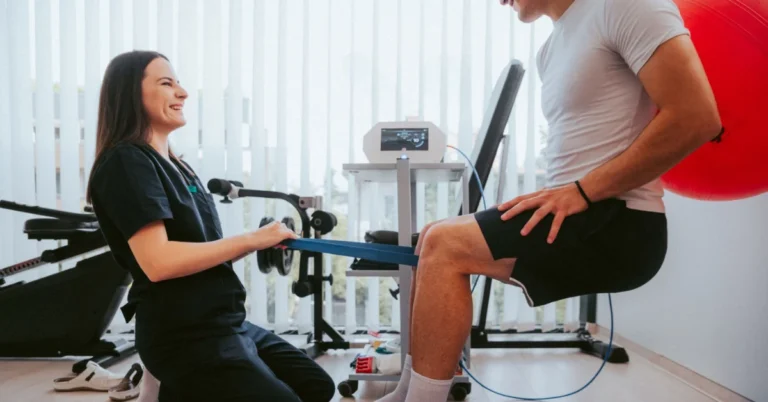
Sports physiotherapy is specialised treatment designed specifically for athletes and active individuals. It combines assessment, rehabilitation, and performance enhancement using techniques tailored to your sport and individual goals.
Unlike general physiotherapy, sports physio focuses on:
- Rapid return to sport safely
- Sport-specific movement patterns
- Performance optimisation
- Injury prevention tailored to your sport
- Understanding athletic demands and training loads
- Coordination with coaching staff and training programs
Sports physiotherapists in Sydney have specialised knowledge of how different sports stress the body, common injury patterns for each sport, and rehabilitation protocols that respect both injury healing and athletic performance demands.
Who needs sports physiotherapy?
You might benefit from sports physiotherapy if you:
- Play recreational or competitive sports
- Train regularly at a gym or fitness facility
- Participate in running, cycling, or outdoor activities
- Have experienced acute sports injuries (ankle sprains, muscle strains, ligament damage)
- Manage chronic pain from overtraining
- Are recovering from sports-related surgery
- Want to improve performance and prevent injury
- Need guidance on training loads and injury prevention
COMMON SPORTS INJURIES TREATED IN SYDNEY
Sydney’s active population experiences a range of sports injuries across different disciplines.
ANKLE INJURIES
Ankle sprains are among the most common sports injuries, affecting athletes in team sports, running, and court sports.
Typical presentation: Twisting your ankle while changing direction, rolling on uneven ground, or landing awkwardly from a jump.
Recovery process: Initial swelling and pain management, followed by balance and proprioception training, strength rebuilding, and sports-specific agility work.
Treatment focus: Restoring ankle stability, preventing chronic instability, and returning to cutting and pivoting movements safely.
KNEE INJURIES
Knee injuries range from ligament damage (ACL, MCL, PCL) to meniscus tears and patellofemoral pain.
Common mechanisms: Twisting with a planted foot, direct contact, or overuse from running and jumping.
Recovery variability: Simple ligament sprains recover in weeks, while ACL reconstructions require 6-12 months of progressive rehabilitation.
Treatment phases: Pain management and swelling reduction, range of motion restoration, strength rebuilding, proprioceptive training, and return to sport protocols.
SHOULDER INJURIES
Shoulders take significant stress in throwing sports, swimming, and weightlifting.
Common injuries: Rotator cuff strains, shoulder impingement, labral tears, and acromioclavicular (AC) joint injuries.
Recovery characteristics: Shoulder injuries often require consistency and patience, with gradual strengthening crucial for stability.
Treatment approach: Scapular stabilisation, rotator cuff strengthening, movement pattern correction, and sport-specific throwing or overhead movement progression.
HAMSTRING AND QUAD STRAINS
Muscle strains occur when muscle fibres tear from sudden forceful contractions or overstretching.
High-risk sports: Running, kicking sports, sprinting, and explosive movements.
Recovery stages: Acute pain management, gentle mobility work, gradual strengthening, and return to sport with progressive loading.
Important: Returning too quickly increases re-injury risk significantly, making professional guidance essential.
LOWER BACK PAIN
Back pain in athletes results from movement imbalances, poor core stability, or sudden injury.
Common causes: Muscle strains, facet joint irritation, disc-related pain, or stability deficits.
Treatment focus: Core stability training, movement pattern correction, flexibility improvements, and load management education.
TENNIS ELBOW AND GOLFER’S ELBOW
Overuse injuries affecting the tendons around the elbow from repetitive gripping, throwing, or swinging.
Recovery approach: Activity modification, eccentric loading exercises, and gradual return to sport-specific movements.
HOW SPORTS PHYSIOTHERAPY ACCELERATES RECOVERY
Professional sports physiotherapy doesn’t just treat your current injury; it accelerates healing and prevents future problems.
ACCURATE DIAGNOSIS PREVENTS DELAYED RECOVERY
Many athletes attempt self-diagnosis or rely on internet research, leading to incorrect treatment and prolonged recovery.
Professional assessment identifies:
- Exact injury location and severity
- Associated compensatory movement patterns
- Underlying factors contributing to injury
- Whether imaging (ultrasound, MRI) is needed
- Realistic recovery timelines
- Actual versus perceived limitations
Correct diagnosis means appropriate treatment from day one, avoiding wasted time on ineffective strategies.
STRUCTURED PROGRESSION THROUGH RECOVERY PHASES
Recovery follows distinct phases with specific goals. Jumping phases or progressing too quickly causes setbacks.
Phase 1: Protection and Pain Management (Days 1-7)
- Rest from aggravating activities
- Swelling management through ice, compression, elevation
- Gentle movement within pain-free ranges
- Education on activity modification
Phase 2: Restoration of Movement (Weeks 2-4)
- Gradual range of motion increases
- Early strengthening within safe limits
- Muscle activation restoration
- Proprioceptive awareness building
Phase 3: Strengthening and Stability (Weeks 4-12)
- Progressive strength training
- Sport-specific movement pattern practice
- Balance and proprioception enhancement
- Core and hip stability development
Phase 4: Return to Sport (Weeks 8-24, depending on injury)
- Sport-specific movement training
- Agility and speed progression
- Confidence building through functional activities
- Graduated return to competition
EXPERT MONITORING PREVENTS RE-INJURY
Professional monitoring throughout recovery identifies when you’re ready to progress versus when you need to consolidate current gains.
Regular assessment tracks:
- Strength improvements
- Range of motion restoration
- Movement quality and symmetry
- Pain responses to activity
- Functional readiness indicators
- Psychological readiness to return
This objective monitoring prevents the common athlete error of returning too early (leading to re-injury) or staying sidelined too long (losing fitness unnecessarily).
INDIVIDUAL PROGRAM CUSTOMISATION
Generic exercises don’t address your specific injury, sport demands, or movement patterns.
Professional programs consider:
- Your exact injury and severity
- Your particular sport’s movement demands
- Your current fitness level
- Your training schedule and competition timeline
- Previous injury history
- Underlying movement imbalances
- Your goals beyond just injury recovery
This customisation means faster, more complete recovery aligned with your athletic goals.
RECOVERY TIMELINE COMPARISON TABLE
| Injury Type | Self-Management Timeline | Professional Physio Timeline | Key Difference |
|---|---|---|---|
| Ankle Sprain (Grade 1) | 4-6 weeks | 2-3 weeks | Early proprioceptive training accelerates stability |
| Hamstring Strain | 6-8 weeks | 4-6 weeks | Structured progressive loading prevents re-injury |
| Shoulder Impingement | 8-12 weeks | 5-8 weeks | Scapular control fixes root cause |
| ACL Reconstruction | 12-18 months | 9-12 months | Progressive neuromuscular training improves return readiness |
| Tennis Elbow | 3-6 months | 6-12 weeks | Eccentric loading and activity modification |
Note: Timelines reflect typical recovery. Individual variation depends on compliance, age, and overall health.
WHY MOBILE SPORTS PHYSIOTHERAPY IN SYDNEY WORKS BETTER FOR ATHLETES
Mobile physiotherapy brings specialised treatment to your home, training facility, or club, offering distinct advantages for athletes.
1. TREATMENT AT YOUR CONVENIENCE
Professional athletes and keen amateurs maintain demanding schedules. Mobile treatment eliminates travel time and fits around training, work, and competition commitments.
2. ENVIRONMENT FAMILIARITY REDUCES PAIN
Being treated in comfortable, familiar surroundings reduces stress and anxiety, allowing your body to relax more fully. Manual therapy and movement-based treatment work better when you’re relaxed.
3. ASSESSMENT IN YOUR ACTUAL ENVIRONMENT
Physiotherapists observe how you move in your normal space, identify space limitations, and teach exercise modifications using equipment you have available. This real-world assessment improves exercise compliance.
4. FAMILY AND SUPPORT SYSTEM INVOLVEMENT
Loved ones can observe your progress, learn how to support recovery, assist with exercises, and understand realistic timelines. This support network improves outcomes significantly.
5. TRAINING FACILITY ASSESSMENT
For athletes training at specific gyms or clubs, physios can assess your training environment, review training programs with coaches, and provide sport-specific guidance aligned with your coaching.
6. FLEXIBILITY FOR BUSY ATHLETES
Weekend, evening, or early morning appointments suit athlete schedules better than standard clinic hours, ensuring consistency with treatment.
7. PREVENTION OF FURTHER AGGRAVATION
Driving with acute injuries is painful and distracting. Home treatment eliminates this barrier to consistent professional care during critical early recovery phases.
SPORTS INJURY ASSESSMENT: WHAT TO EXPECT IN YOUR FIRST APPOINTMENT
Understanding the assessment process helps you prepare and get maximum value from your initial consultation.
DETAILED INJURY HISTORY
Your physiotherapist asks about:
- When the injury occurred and how it happened
- Immediate pain and swelling response
- Activities that increase or decrease pain
- Previous similar injuries
- Current training program and loads
- Your competition or performance goals
- Relevant medical history
This comprehensive history informs diagnosis and recovery planning.
PHYSICAL EXAMINATION
Assessment includes:
- Movement and flexibility testing
- Strength assessment comparing both sides
- Special tests for specific injuries
- Functional movement analysis
- Observation of movement quality and compensations
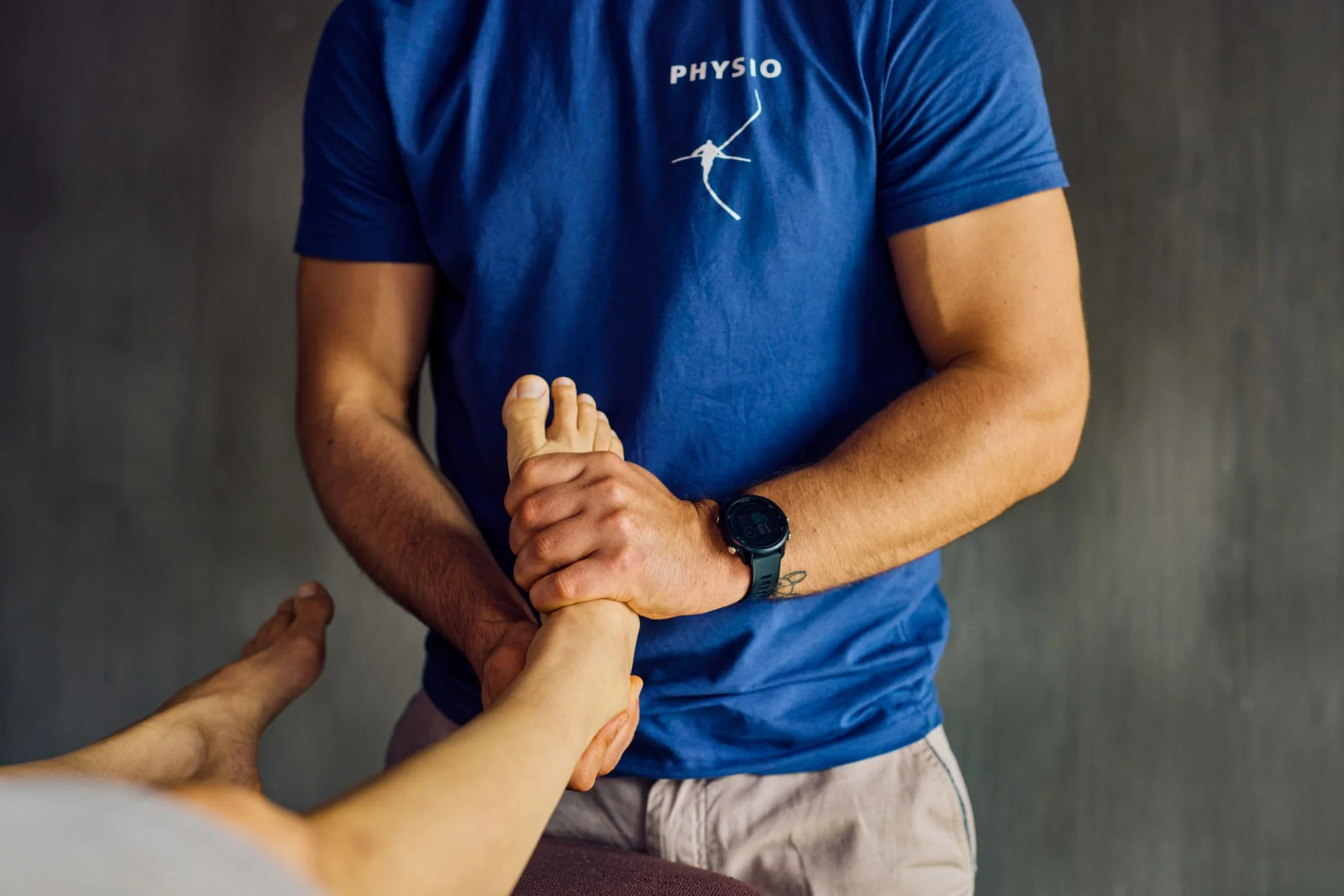
- Palpation (feeling) to identify tender areas
- Assessment of relevant joints above and below injury
Thorough examination identifies not just the injury location but underlying movement imbalances contributing to injury.
PERFORMANCE TESTING
Depending on your injury and goals, testing might include:
- Single leg balance or hop tests
- Running or movement pattern analysis
- Sport-specific movement assessment
- Proprioceptive (balance) testing
- Strength measurement
These tests establish baseline measurements to track progress objectively.
DISCUSSION AND PLANNING
Your physio explains:
- What the injury is and why it happened
- Expected recovery timeline
- Treatment approach and frequency
- What you need to do at home
- Activity modifications during recovery
- Return-to-sport timeline and process
Clear communication empowers you to actively participate in recovery rather than passively receive treatment.
TREATMENT APPROACHES ACROSS RECOVERY PHASES
Effective sports physiotherapy adapts treatment to your current recovery phase.
ACUTE PHASE TREATMENT (First 1-2 weeks)
Focus: Protect the injury, manage pain and swelling, prevent further damage.
Treatment includes:
- Manual therapy to reduce swelling and pain
- Soft tissue release and gentle mobilisation
- Guidance on ice, compression, elevation
- Pain relief through movement
- Education on activity modification
- Protection strategies during daily activities
Goal: Establish pain-free movement foundation for next phase.
EARLY REHABILITATION PHASE (Weeks 2-6)
Focus: Restore normal movement, begin gentle strengthening, prevent stiffness.
Treatment includes:
- Progressive range of motion exercises
- Muscle activation and early strengthening
- Movement pattern retraining
- Balance and proprioceptive exercise introduction
- Gradual activity progression
- Sport-specific movement preparation
Goal: Restore functional movement ready for progressive strengthening.
STRENGTH AND CONDITIONING PHASE (Weeks 6-16)
Focus: Build strength and power, develop sport-specific endurance, enhance stability.
Treatment includes:
- Progressive resistance training
- Core and hip stability work
- Sport-specific movement patterns
- Agility and cutting movement progression
- Endurance training within sport context
- Psychological readiness assessment
Goal: Achieve strength and confidence to return to sport safely.
RETURN-TO-SPORT PHASE (Weeks 12+, depending on injury)
Focus: Simulate sport demands, build confidence, finalise readiness.
Treatment includes:
- Sport-specific drill progression
- Training load integration with coaching
- Competition-intensity movement practice
- Psychological readiness evaluation
- Injury prevention strategy implementation
- Maintenance exercise program development
Goal: Safe, confident return to competition with reduced re-injury risk.
INJURY PREVENTION: STAYING OFF THE SIDELINES
Prevention is better than recovery. Sports physiotherapy prevents injury through assessment and targeted strategies.
MOVEMENT PATTERN ASSESSMENT AND CORRECTION
Poor movement patterns increase injury risk. Assessment identifies:
- Muscle imbalances
- Limited range of motion
- Stability deficits
- Compensatory patterns
- Sport-specific weaknesses
Correction through targeted exercises prevents injuries before they occur.
STRENGTH AND CONDITIONING GUIDANCE
Proper training prevents overuse injuries. Guidance includes:
- Appropriate exercise progression
- Training load management
- Periodisation principles
- Flexibility and mobility work
- Core stability development
- Sport-specific conditioning
Balanced conditioning reduces injury risk significantly.
PRE-SEASON ASSESSMENT AND PREPARATION
Before competition seasons begin, assessment identifies previous injury weak points and addresses them before training intensifies.
FOOTWEAR AND EQUIPMENT ADVICE
Sometimes equipment contributes to injury. Advice covers:
- Sport-appropriate footwear
- Lacing and cushioning considerations
- Taping or bracing when appropriate
- Equipment fitting
- Maintenance and replacement timing

RETURNING TO SPORT SAFELY: THE GRADUAL PROGRESSION APPROACH
Return to sport is not an on-off switch. Graduated progression builds confidence while protecting healing tissues.
FUNCTIONAL RETURN-TO-SPORT CRITERIA
Rather than timeline alone, readiness is determined by:
- Pain-free or minimal pain with activities
- Strength symmetry compared to uninjured side (usually 90%+ strength)
- Confidence in movement and stability
- Sport-specific movement competence
- Psychological readiness
- Coaching staff agreement on training integration
Meeting these criteria rather than arbitrary timeframes reduces re-injury risk.
GRADUATED RETURN PHASES
Return to sport follows these phases:
Phase 1: Light training without competition (Weeks 1-2 of return phase)
- Modified training drills
- Non-contact participation
- Sport movements at reduced intensity
- Building confidence
Phase 2: Moderate training with some competition (Weeks 3-4)
- Increased training intensity
- Limited competition exposure
- Continued monitoring
- Confidence consolidation
Phase 3: Full training and competition (Weeks 5+)
- Full participation in training
- Competition return
- Maintenance exercise continuation
- Ongoing monitoring
Each phase typically lasts 2-4 weeks, with progression based on response rather than calendar dates.
COMMUNICATION WITH COACHING STAFF
Coordinating with coaches ensures:
- Training load matches recovery phase
- No conflicting demands on healing tissues
- Gradual return aligns with team needs
- Coaching staff understand limitations
- Return progression supports team goals
This collaboration prevents coaches from pushing return too quickly or training loads from exceeding readiness.


Health Next Door, we bring mobile physiotherapy to your doorstep, ensuring a patient-centric approach that prioritizes your needs and goals. Our experienced physiotherapists assess your condition and create a personalized therapy plan, helping you recover in the comfort of your home with expert care tailored just for you. With our comprehensive mobile physiotherapy services, you get professional treatment for pain relief, injury recovery, and mobility improvement—all without leaving your home. Experience convenient, high-quality care designed to fit your lifestyle.
View All Articles