Physiotherapy for Osteoporosis | Home Physio Guide | HND

What Is Osteoporosis and Why Does It Matter?
Osteoporosis is a condition where bones lose density and become fragile. The word literally means “porous bone.” When bone tissue breaks down faster than the body can rebuild it, even a minor fall or bump can cause a serious fracture.
It is often called a “silent condition” because there are no obvious symptoms until a fracture occurs. That is why early screening and proactive management are so important.
Who is most at risk? Osteoporosis affects women more frequently than men, particularly after menopause when oestrogen levels drop sharply. However, men over 70, people with a family history of the condition, those who have taken long term corticosteroids and anyone with low calcium or vitamin D levels are also at increased risk.
The most common fracture sites are the hip, spine and wrist. Hip fractures in particular can be life changing for older Australians, often leading to extended hospital stays, loss of independence and a decline in overall health.
Key Osteoporosis Statistics for Australia
- Around 924,000 Australians are living with osteoporosis
- 66% of Australians over 50 have osteoporosis or osteopenia
- An osteoporotic fracture occurs roughly every 3 to 4 minutes across the country
- 1 in 2 women and 1 in 3 men over 60 will experience an osteoporotic fracture
- Hip fractures alone cost the Australian healthcare system over 2 billion annually
These numbers make it clear: osteoporosis is not just a natural part of ageing. It is a manageable health condition, and physiotherapy plays a central role in that management. For older Australians already at risk of falls, understanding how to prevent falls in the elderly is a vital first step.
How Physiotherapy for Osteoporosis Actually Works
A physiotherapist trained in bone health does far more than hand you an exercise sheet. They assess your individual fracture risk, evaluate your balance and strength, review your medical history and design a program that is safe and progressive.
Here is what a typical physiotherapy for osteoporosis program includes:
- Thorough initial assessment. Your physio reviews your bone density results (DEXA scan), falls history, current fitness level and any other conditions such as arthritis or heart disease. This shapes every decision that follows.
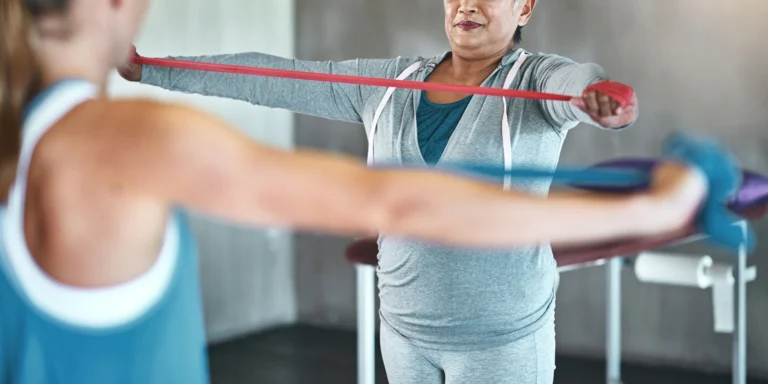
- Personalised exercise prescription. Based on your assessment, your physio designs a program targeting three pillars: resistance training to load the bones, weight bearing impact exercises to stimulate bone growth, and balance training to prevent falls.
- Hands on guidance and supervision. Correct form matters enormously when bones are fragile. Your physio supervises each movement, adjusts loads and ensures you are progressing safely without risk of injury.
- Falls prevention strategies. Reducing the chance of falling is just as important as strengthening bones. Your physio works on lower limb strength, reaction time, dynamic balance and confidence with movement.
- Ongoing review and progression. Bones only respond to loading that exceeds what they are accustomed to. Your physio gradually increases the challenge as your strength improves, keeping the program effective over months and years.
- Education and empowerment. Understanding your condition gives you confidence. Your physio explains which movements are safe, which to avoid and how to protect your spine during daily tasks like bending, lifting and gardening.
For seniors already exploring home based rehabilitation, aged care physiotherapy provides the foundation for this kind of structured, ongoing support.
“I was nervous about exercising with osteoporosis because I thought I might break something. My physio showed me that the right exercises actually make my bones stronger. After six months of supervised sessions at home, my balance improved dramatically and my last DEXA scan showed my bone density had stabilised.” – Margaret, 72, Sydney
Want personalised osteoporosis support at home?
Book a consultation at Health Next Door
Safe Exercises for Osteoporosis: What Works and What to Avoid
Not all exercise is created equal when it comes to bone health. Some activities strengthen bones effectively, while others can increase fracture risk. A qualified physiotherapist will always tailor your program, but here is a general guide.
Exercises That Help Build Bone Strength
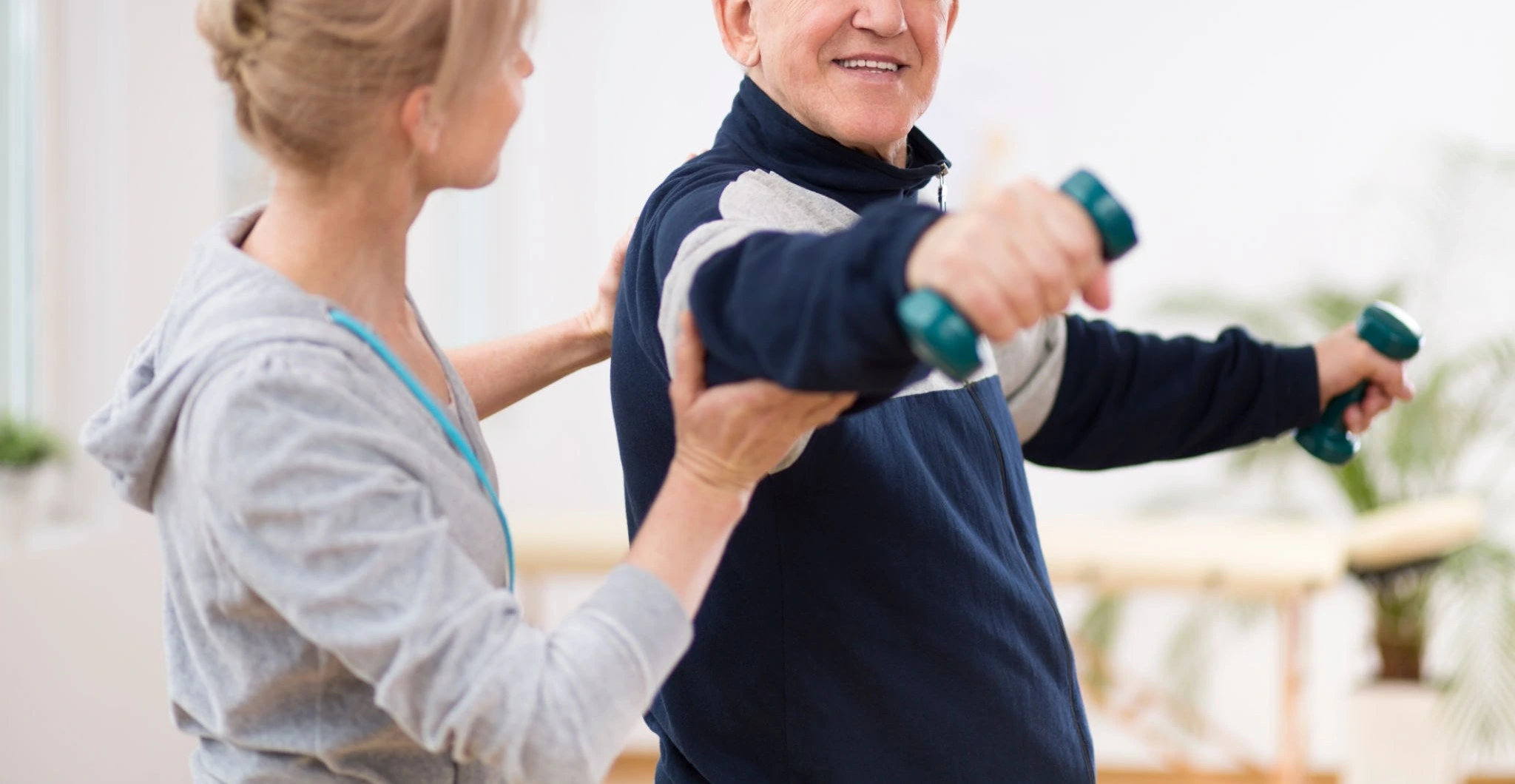
- Resistance training with free weights, bands or body weight (squats, lunges, deadlifts, shoulder press)
- Weight bearing impact exercises like brisk walking, stair climbing, dancing and gentle jogging
- Balance training such as single leg stands, tandem walking, heel to toe walking and tai chi
- Posture exercises targeting the thoracic spine to reduce rounding of the upper back
- Back extension exercises to support spinal strength and alignment
Looking for simple ways to start improving stability? These balance exercises for seniors at home are a great complement to a supervised osteoporosis program.
Exercises to Approach with Caution or Avoid
- Loaded forward flexion of the spine (sit ups, toe touches, crunches)
- High impact twisting movements (golf swings, bowling) unless you are conditioned for them
- Explosive or jerky movements without proper supervision
- Prolonged static stretching of the spine in a flexed position
It is worth noting that swimming and cycling, while excellent for cardiovascular fitness, do not provide the weight bearing stimulus that bones need to grow stronger. They can still form part of a healthy lifestyle, but should not be the only exercise in an osteoporosis management plan.
Exercise Types and Their Impact on Bone Health
Exercise Type | Bone Building Effect | Falls Prevention | Best For |
Heavy resistance training | Strong (loads bones directly) | Good (builds leg/core strength) | Spine, hip, wrist |
Impact exercises (walking, stairs, dancing) | Moderate to good | Moderate | Hip, lower limbs |
Balance training (tai chi, single leg stands) | Minimal direct effect | Excellent | Fall risk reduction |
Swimming / cycling | Very low (no weight bearing) | Low | Cardiovascular fitness only |
Yoga (modified for osteoporosis) | Low to moderate | Good (balance, posture focus) | Flexibility, body awareness |
The key takeaway: a combination of resistance training, weight bearing impact exercise and balance work delivers the best results. This is exactly what a physiotherapist builds into your personalised program. For more detailed exercise guidance from a clinical perspective, the Healthy Bones Australia exercise guidelines are an excellent resource.
Why Home Based Physiotherapy Makes a Difference for Osteoporosis
For someone with fragile bones, simply getting to a clinic can feel risky. Uneven footpaths, crowded waiting rooms and unfamiliar gym equipment all add unnecessary stress and potential hazards.
That is where mobile physiotherapy changes the equation. When a qualified physio comes to your home, the barriers disappear. You get expert, one on one care in the place where you feel safest.
Benefits of In Home Osteoporosis Physiotherapy
- Safety first. Treatment happens in your own familiar environment, where you feel stable and confident.
- Tailored to your space. Your physio identifies fall hazards in your home and designs exercises using equipment that suits your living situation.
- No travel stress. No driving, no public transport, no navigating car parks or stairwells.
- Better consistency. When appointments are convenient, you are far more likely to stick with the program long term. Consistency is everything with bone health.
- Family involvement. Loved ones and carers can observe sessions and learn how to support your exercises between visits.
- Functional training. Your physio trains you in the exact movements you do every day: getting in and out of chairs, reaching for shelves, managing stairs and bending safely.
To understand more about how this model of care works, explore what at home physiotherapy looks like in practice across Sydney, Brisbane and the Gold Coast.
In Clinic vs Mobile Physiotherapy for Osteoporosis
Factor | Clinic Based Physio | Mobile (Home) Physio |
Travel required | Yes, can be difficult for elderly | None, physio comes to you |
Fall risk during travel | Moderate to high | Eliminated |
Home environment assessment | Not included | Built into every session |
Functional training context | Gym based, may not transfer | Practised in your actual home |
Family/carer involvement | Rarely possible | Easily included |
Session consistency over time | Can drop off due to transport barriers | Higher adherence and long term results |
Personalisation of program | Standard gym equipment | Adapted to your home and daily tasks |
Dedicated in home rehabilitation experts across Sydney, Brisbane and the Gold Coast deliver this kind of personalised, convenient care every day. It is physio that fits into your life, not the other way around.


Health Next Door, we bring mobile physiotherapy to your doorstep, ensuring a patient-centric approach that prioritizes your needs and goals. Our experienced physiotherapists assess your condition and create a personalized therapy plan, helping you recover in the comfort of your home with expert care tailored just for you. With our comprehensive mobile physiotherapy services, you get professional treatment for pain relief, injury recovery, and mobility improvement—all without leaving your home. Experience convenient, high-quality care designed to fit your lifestyle.
View All Articles